
Mammals · Wildlife Rescue Story
Cantabrian Brown Bear
Ursus arctos
8:06 · Wildlife Stories AI Watch on YouTube
Real: the species, its habitat in Somiedo, its conservation status, its threats and the places named here.
Fiction: Neru, his story, the people in it and everything that happens to him.
Neru's Story
The slope gave way in the rain and took the path with it. On the far side there is a bear, twenty months old, with nowhere left to climb.
This is the story of Neru, a young Cantabrian brown bear stranded on bare rock high in the mountains of Somiedo, in northern Spain. Brown fur tipped with autumn gold, lower legs running almost black. Robust but not yet grown, and only weeks from leaving his mother when the mountain came down between them. Not badly hurt: a scrape along one shoulder, and no way up.
This is a cinematic AI-generated wildlife story inspired by real species, real habitats and real conservation challenges. It is not real rescue footage.
Neru's story is fictional — the species, the mountain and the danger are real.
Chapters
-
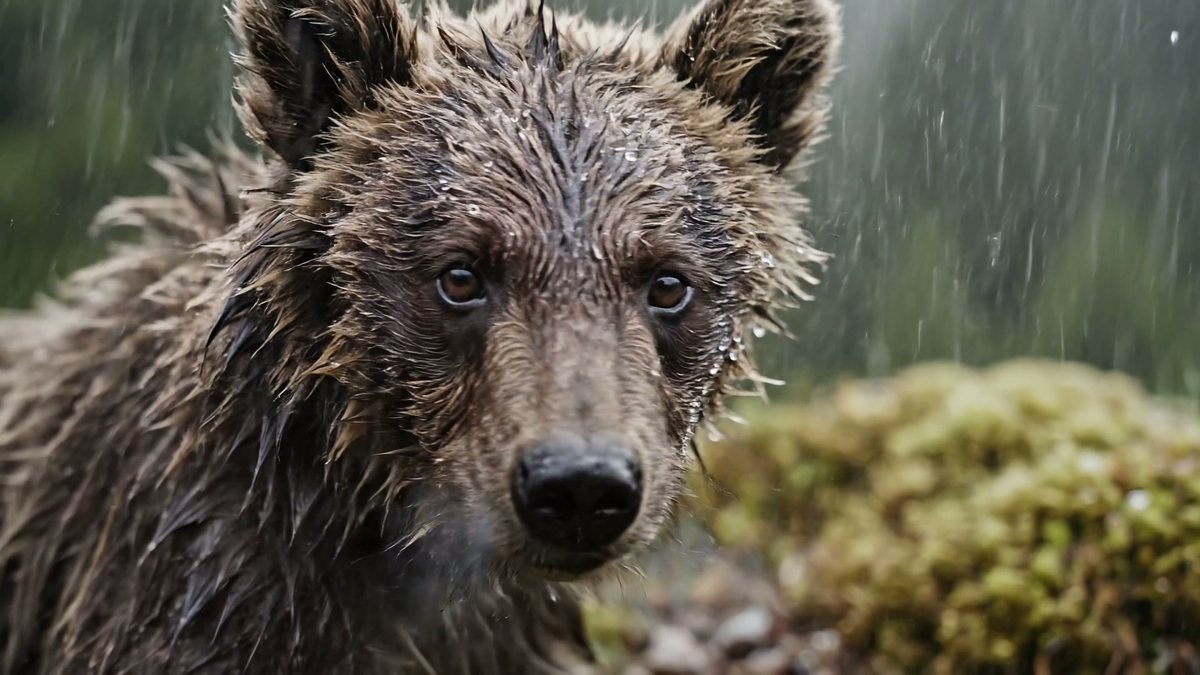
The scar 0:00 on YouTube -
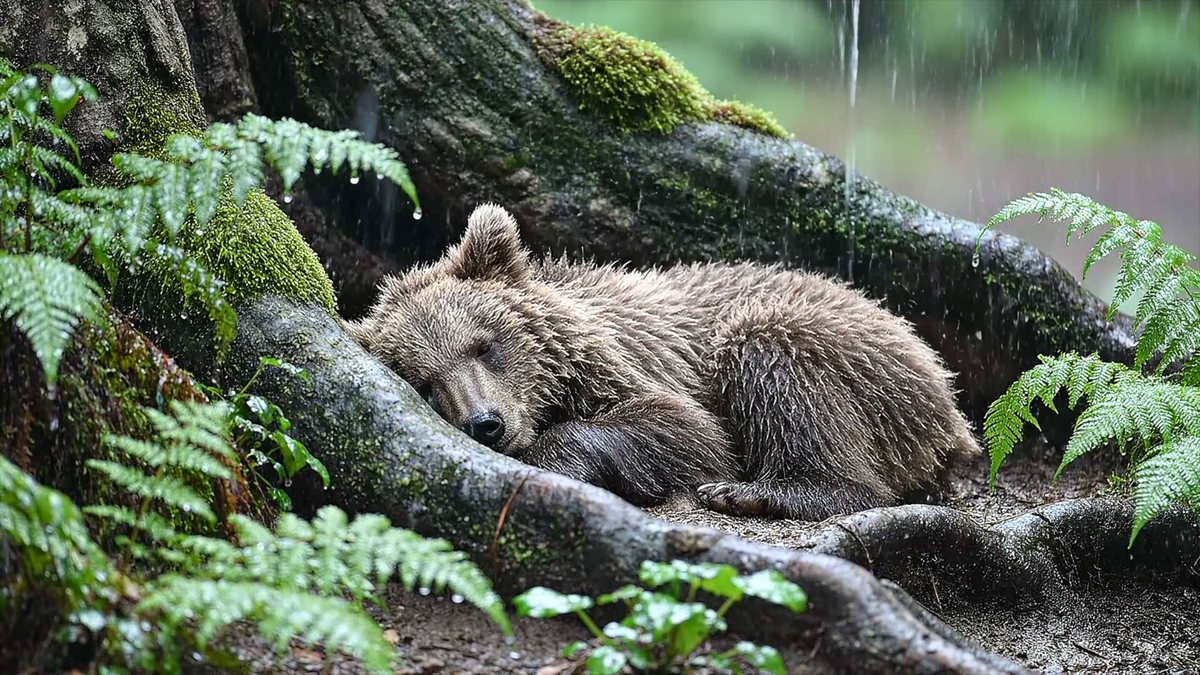
A cub in name only 0:29 on YouTube -
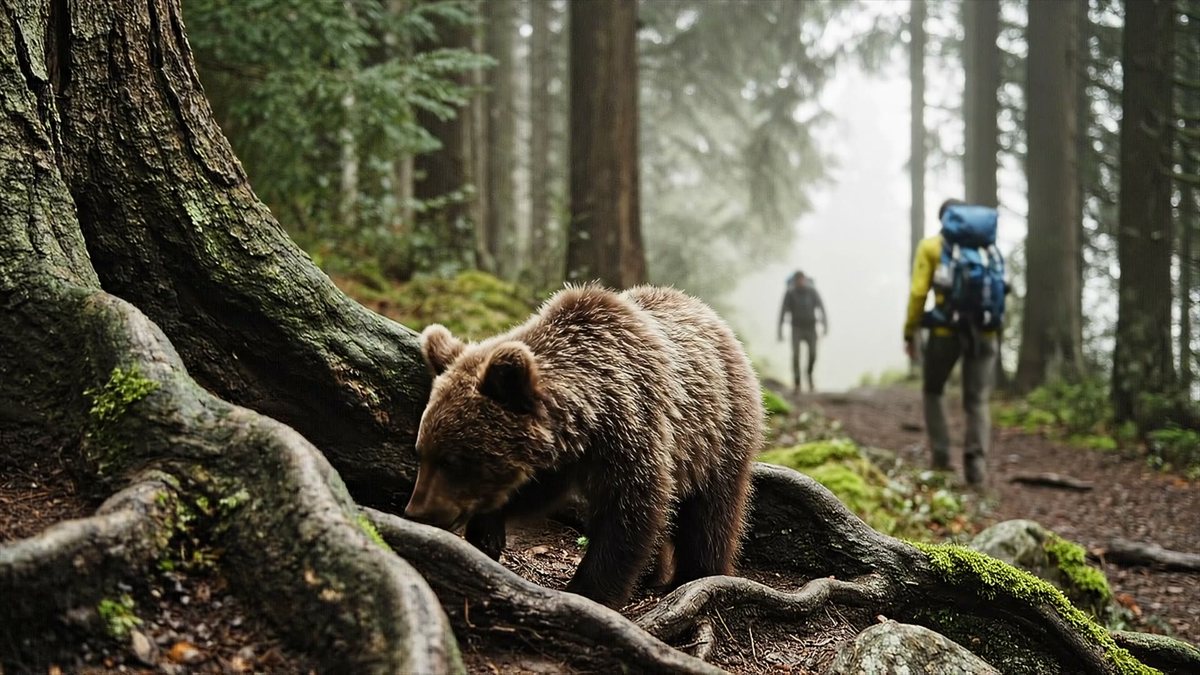
The slope gave way 1:32 on YouTube -
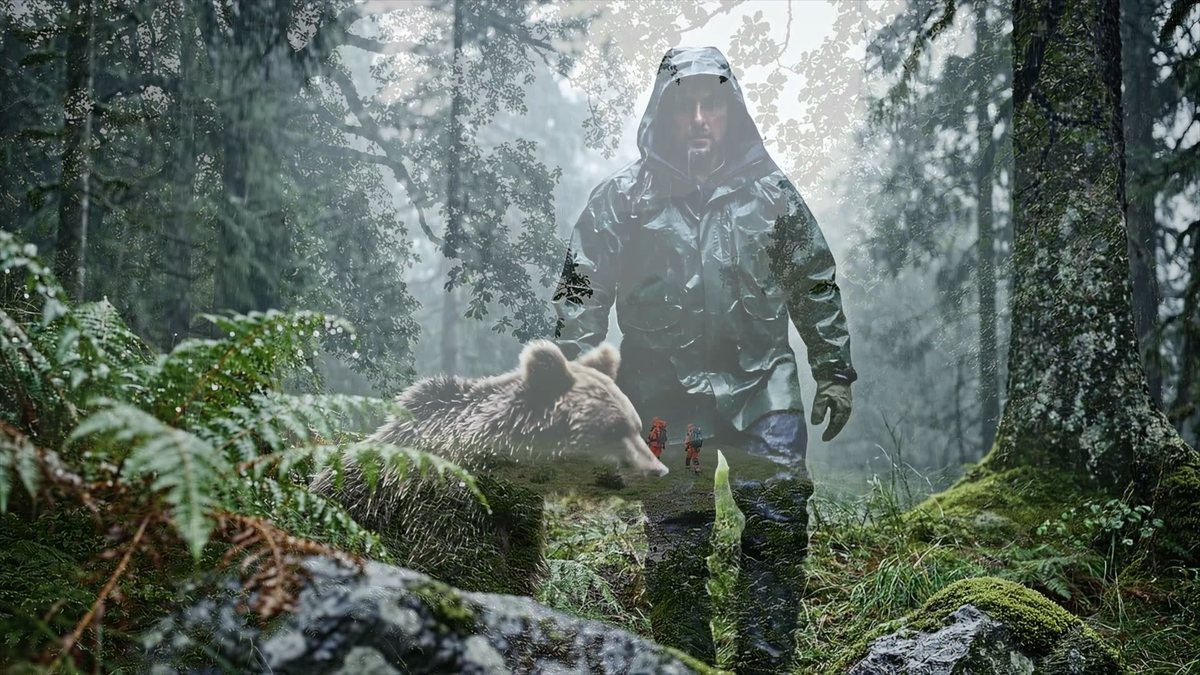
Found 2:23 on YouTube -
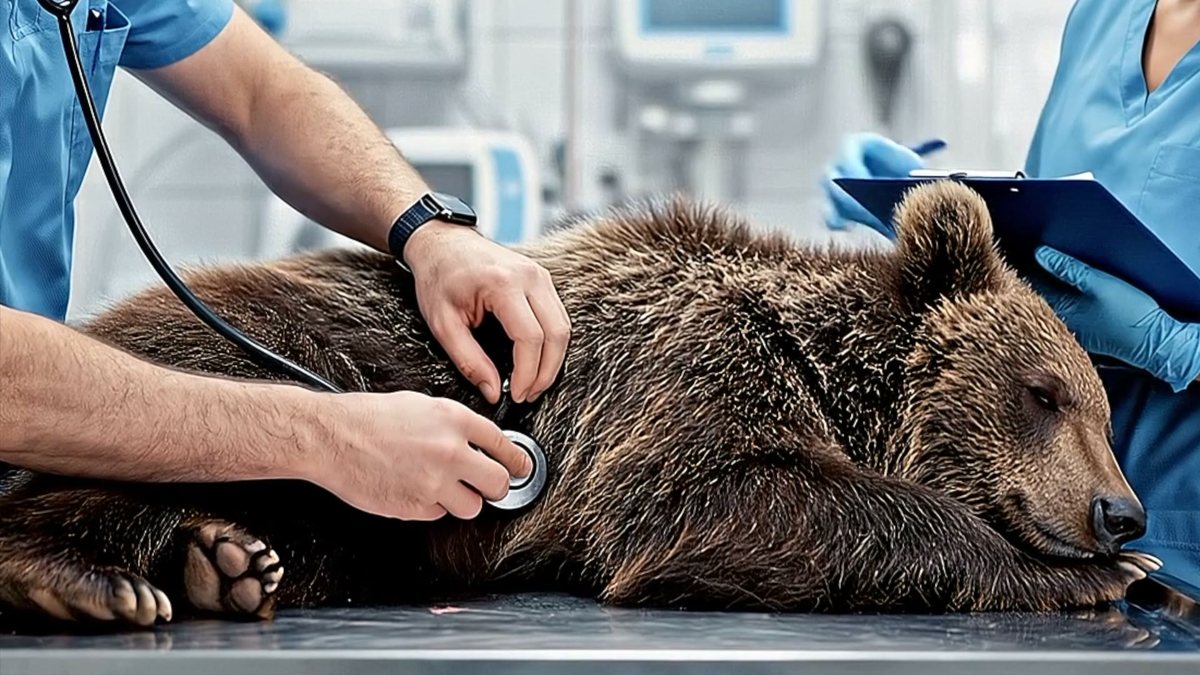
He is not ours 3:57 on YouTube -
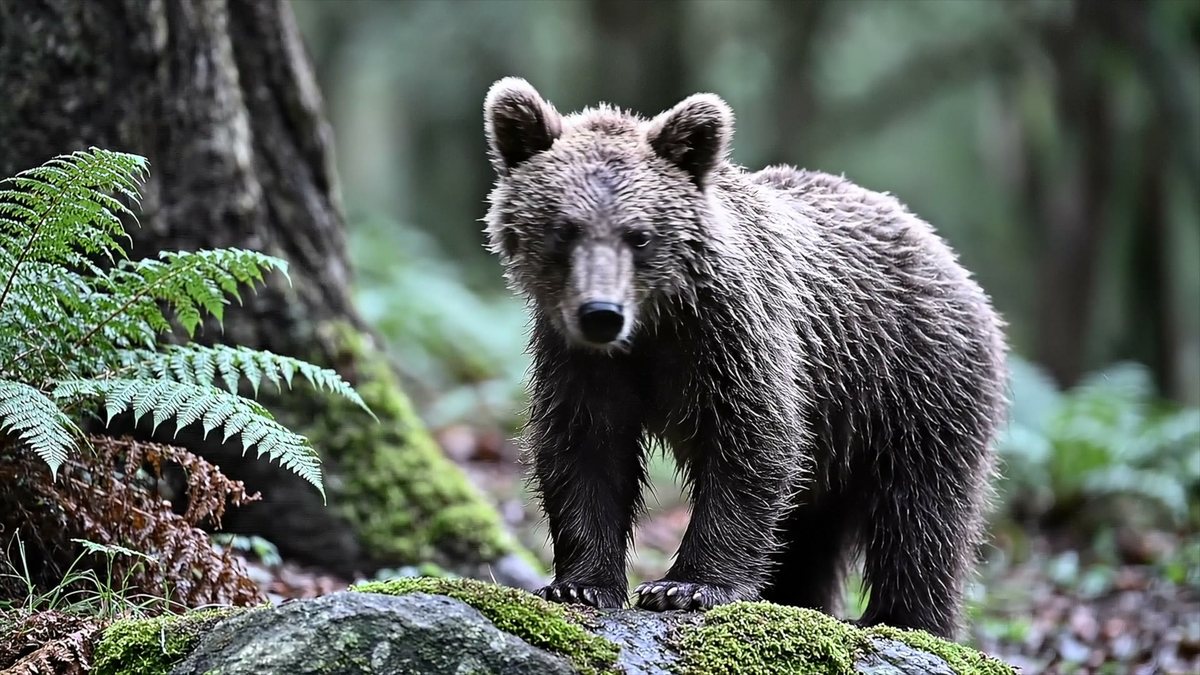
Still wild 5:45 on YouTube -
The open door 6:16 on YouTube -
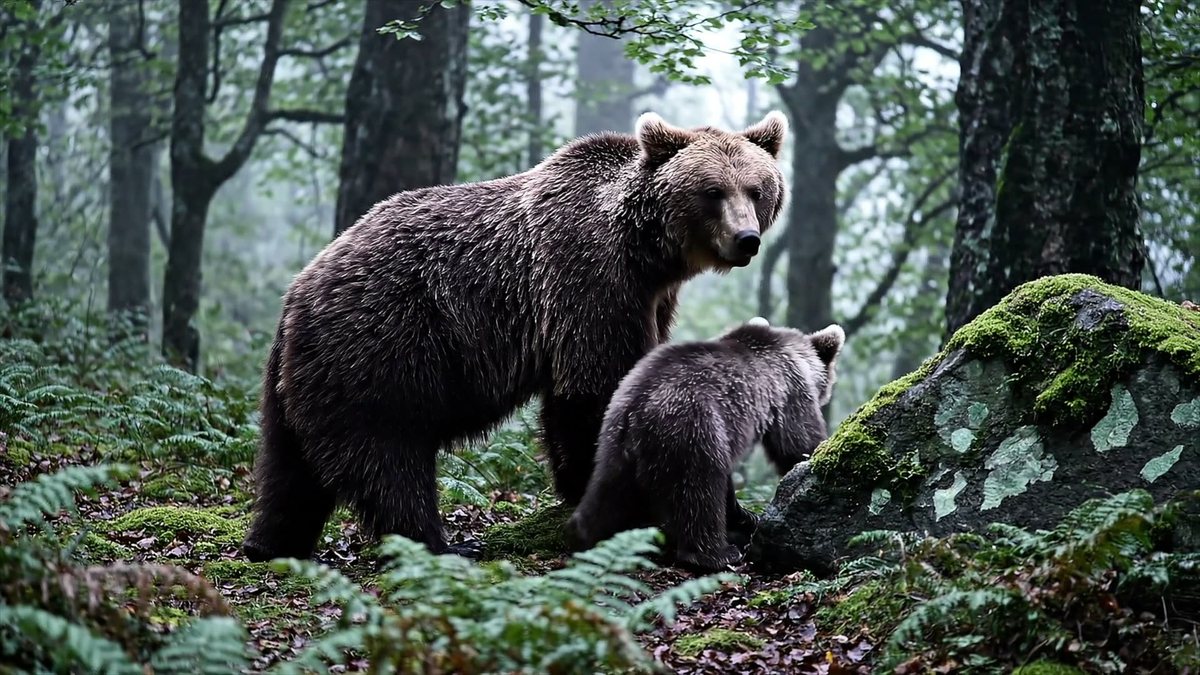
Wild 7:28 on YouTube
Cantabrian Brown Bear: Species Facts
Range & Habitat
The Cantabrian brown bear population lives in the Cantabrian Mountains of northern Spain, across Asturias, Castilla y León (the provinces of León and Palencia), Cantabria and a small part of Galicia (Lugo). Fundación Oso Pardo's 2026 fact sheet estimates that, counting the 10×10 km squares with permanent presence, bears occupy around 8,600 km², plus a growing area where they appear only sporadically.[2]
The population is divided into two subpopulations. As described in Spain's 2019 national strategy, the western one occupies the eastern sierras of Lugo and the Ancares of León, the Alto Sil of León and the centre and south-west of Asturias; the eastern one the Montaña Palentina, the Montaña Oriental Leonesa and the mountains of Cantabria, with sporadic presence in eastern Asturias. Until the early 21st century the two nuclei were almost completely isolated. In 2008 the first bears with a western father and an eastern mother were detected in the east, and Fundación Oso Pardo's 2026 fact sheet describes the movement of males between the two as now seemingly habitual.[1][2]
In March 2025, Spain's environment ministry (MITECO) put the Cantabrian population at around 370 bears, citing the latest census by the regional governments.[6]
Earlier figures, for the record: the 2019 national strategy estimated the western subpopulation at around 230–270 bears, from the counts of females with cubs available then, and the eastern one at a count that could exceed 40. In 2017, 35 females with cubs of the year were counted in the west and 6 in the east, with 73 cubs in total, and in the west the annual counts between 1994 and 2017 gave a growth rate of about 10 % a year.[1]
Threats
Deaths caused by people fell but did not stop. Between 2000 and 2019, according to the 2019 national strategy, at least 16 bears were known to have died in the Cantabrian Mountains from human causes: seven poisoned, four in snares and five shot, plus one run over on the A-6 motorway. Poisoned bait and snaring are illegal, and the strategy calls for continued work against residual poaching, with special attention to poison.[1]
Loss of habitat quality and fragmentation. The 2019 national strategy lists forest fires, new transport infrastructure, extractive activities, tracks and the spread of nature tourism and of some leisure and sports activities as affecting feeding and refuge areas, and notes that roads cut across the corridor of about 50 km that separates the two subpopulations.[1]
Low genetic variability, especially in the eastern subpopulation, which the 2019 national strategy described as having been among the lowest recorded in European bear populations, and as rising once males began crossing between the two nuclei.[1]
Bears that get used to human food or to people. The 2019 national strategy gives priority to preventing and managing habituated and problem bears, and a 2023 project of Fundación Oso Pardo's URSUS programme monitors habituated Cantabrian bears.[1][3]
Climate change. In March 2025 MITECO said that global warming is already affecting the wild fruits the bears feed on, with irregular bilberry crops in recent years, and that it favours shorter hibernation or none at all, so more bears are expected to be active in winter. A 2025 project of Fundación Oso Pardo's URSUS programme is assessing its effects on the nut-producing plants bears depend on.[6][3]
Conservation Status & Work
Ursus arctos: Least Concern on the IUCN Red List (global assessment of the species, published in 2017). That category describes the brown bear as a species across its whole world range. It is not the status of the Cantabrian population.[5]
The Cantabrian population lives in Spain, where the brown bear is listed in the category «en peligro de extinción» (in danger of extinction) in the Catálogo Español de Especies Amenazadas (Real Decreto 139/2011). It also appears in Annexes II and IV of the EU Habitats Directive 92/43/EEC and in Annex II of the Bern Convention. The regional catalogues of Asturias (Decreto 32/90), Cantabria and Galicia also list it as «en peligro de extinción».[1]
The Strategy for the Conservation of the Brown Bear in the Cantabrian Mountains was approved by Spain's Conferencia Sectorial de Medio Ambiente on 30 September 2019. It guides the recovery plans of Asturias, Cantabria, Castilla y León and Galicia, which are responsible for them under Law 42/2007.[1]
The 2019 national strategy credits presence on the ground against poaching, by the Guardia Civil's Seprona and the regional rangers with support from game-reserve wardens and conservation organisations, with reducing human-caused deaths, especially those linked to illegal steel snares.[1]
Fundación Oso Pardo, a conservation NGO based in Santander, runs the URSUS research and monitoring programme, funded mainly by MITECO. Its listed work includes sentinel networks against poaching, removal of illegal capture devices in bear areas, and the update of the bear distribution area for 2017–2023. It also runs the HÁBITAT, HUELLA and LIFE programmes and the Casas del Oso network of visitor centres.[3][4]
Counts of females with cubs have been made in a standardised, coordinated way since 1989, by the regional governments with Fundación Oso Pardo and other collaborators. The 2019 national strategy describes it as the indicator the IUCN recommends for monitoring bear populations.[1][2]
According to Fundación Oso Pardo's 2026 fact sheet, two young female bears found in poor condition in the western nucleus, in Asturias, have been rehabilitated in captivity in recent years and released in the eastern nucleus; if they survive and breed, Fundación Oso Pardo says, it will be a further step towards the genetic recovery of the population.[2]
Sources
- Estrategia para la conservación del oso pardo (Ursus arctos) en la Cordillera Cantábrica. Ministerio para la Transición Ecológica y el Reto Demográfico (MITECO). 2019. miteco.gob.esConsulted 2026-10-27.
- Ficha 1: Cuántos osos hay y dónde viven. Fundación Oso Pardo. 2026. fundacionosopardo.orgConsulted 2026-10-27.
- Programa URSUS. Fundación Oso Pardo. fundacionosopardo.orgConsulted 2026-10-27.
- Fundación Oso Pardo: programas y Casas del Oso. Fundación Oso Pardo. fundacionosopardo.orgConsulted 2026-10-27.
- McLellan, B.N., Proctor, M.F., Huber, Đ. & Michel, S. 2017. Ursus arctos (amended version of 2017 assessment). The IUCN Red List of Threatened Species 2017: e.T41688A121229971. DOI 10.2305/IUCN.UK.2017-3.RLTS.T41688A121229971.enConsulted 2026-10-27.
- Sara Aagesen: “En menos de tres décadas las poblaciones de oso pardo han pasado de menos de 70 ejemplares a más de 400”. Ministerio para la Transición Ecológica y el Reto Demográfico (MITECO), press release, 26 March 2025. 2025. miteco.gob.esConsulted 2026-10-27.